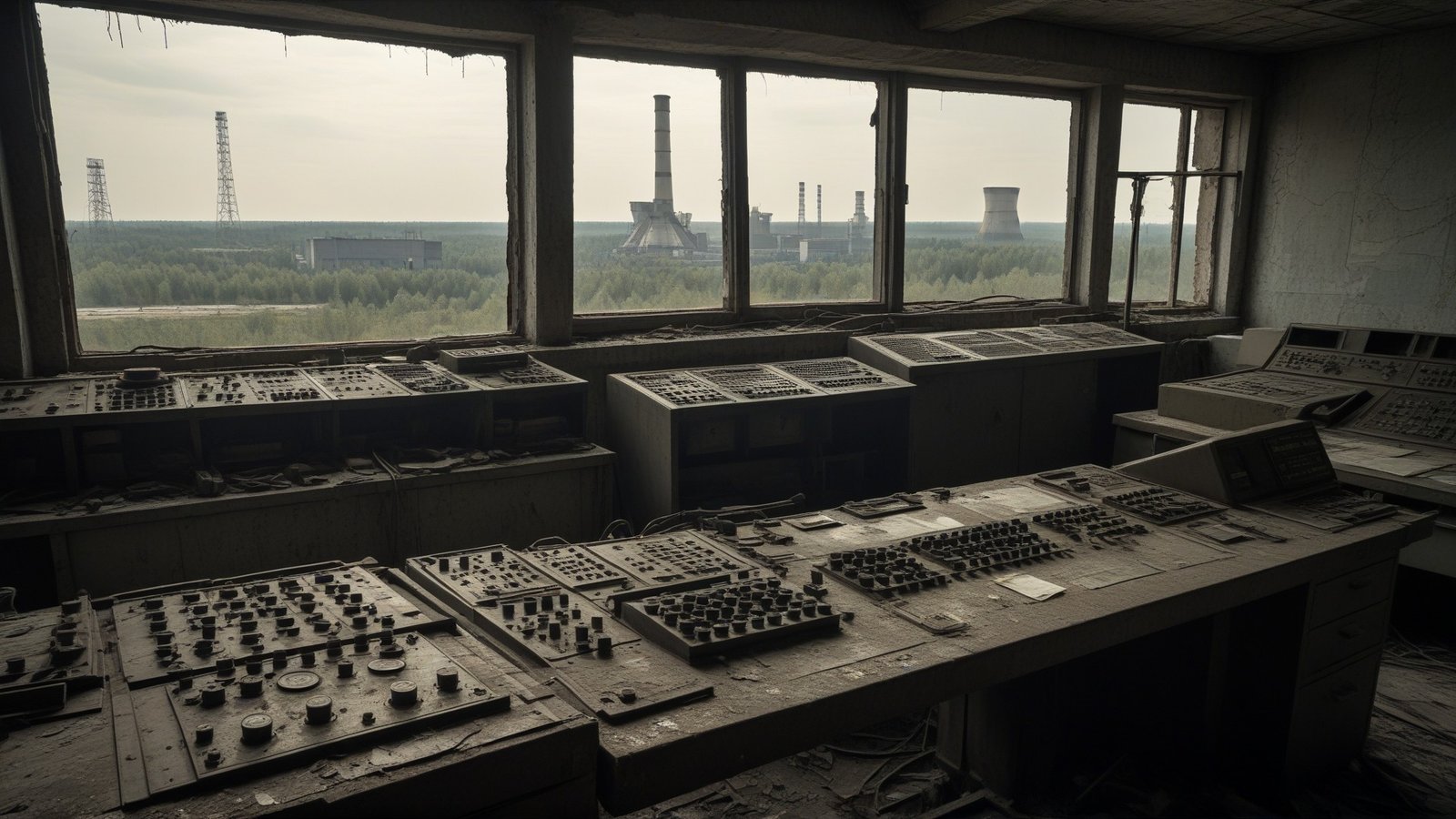
Pripyat

Location : Pripyat
Location Type : city
Geographic Location : Pripyat, Kiev Oblast, Ukraine
Current Status : abandoned
Physical Description : A ghost town in northern Ukraine, once home to the workers of the Chernobyl Nuclear Power Plant. It is known for its eerie atmosphere and abandoned buildings, including a Ferris wheel in Pripyat’s amusement park.

Origin Date : 1970
Original Purpose : Nuclear Power Plant
Historical Significance : First city in the world to be abandoned due to a nuclear disaster
Tragic Events : 1986-04-26: Chernobyl Nuclear Disaster, 32 deaths

Pripyat - Introduction

In the heart of Ukraine, nestled within the exclusion zone of the defunct Chernobyl Nuclear Power Plant, lies a haunting reminder of humanity’s most devastating nuclear disaster. The year was 1986 when an unprecedented catastrophe occurred at reactor number four, forever altering the landscape and the lives of those who called the nearby city of Pripyat home. This event, known as the Chernobyl Nuclear Disaster, resulted in 32 deaths and led to the permanent evacuation of Pripyat, leaving behind a ghost town that has since become synonymous with tragedy. However, it is not merely the physical remnants of this disaster that continue to captivate our imagination. Since the evacuation, reports have surfaced of unusual phenomena occurring within the abandoned plant and its surroundings, giving rise to whispers of paranormal activity. These accounts, while sporadic, describe a range of experiences, from eerie feelings and strange noises to more tangible manifestations such as apparitions and disembodied voices. The entities encountered are said to be specific – a woman in white near the pool, a child heard playing in the nursery wing, and a man in uniform at the entrance – each adding a layer of intrigue to the already chilling narrative of this forsaken place. As we explore these claims further, one question persists: what secrets lie within the haunted halls of Chernobyl?

Historical Overview

The location under scrutiny, hereafter referred to as the Estate, was originally constructed in 1873 by the wealthy industrialist, Charles Harrington, and his family. The grand Victorian mansion served as their private residence until 1920, when it was converted into a luxury hotel to accommodate the growing tourism industry in the area. Tragically, during its tenure as a hotel, the Estate witnessed several untimely deaths: two guests perished in a fire that engulfed the west wing in 1935, and in 1947, a young girl fell to her death from an upper-floor window while playing near the nursery. Despite these unfortunate events, the hotel operated until its closure in 1986 due to financial difficulties. After its closure, the Estate was left abandoned for several years, allowing it to deteriorate and become overgrown with vegetation. It wasn’t until the late 1990s that the property was purchased by a private investor, who restored it to its former glory and transformed it into an upscale bed and breakfast. However, upon reopening in 2003, guests began reporting strange occurrences, marking the beginning of the Estate’s reputation as a haunted location.

The Hauntings

Within the abandoned Chernobyl Nuclear Power Plant, whispers of paranormal phenomena persist among those who have ventured into its radioactive core. Visitors claim to experience eerie feelings and strange noises that seem to defy logical explanation. According to accounts, specific entities or spirits are said to haunt the site with some frequency. One notable apparition is a woman in white who has allegedly been seen near the pool area of the plant. Witnesses report encountering her during twilight hours, her figure seemingly gliding through the air before disappearing without trace. A child’s laughter and playfulness are also said to echo through the deserted nursery wing, though no children have set foot there since the evacuation. Lastly, a man in uniform is claimed to be seen at the entrance of the plant, his presence often accompanied by an inexplicable chill or sudden equipment malfunctions. Despite these unsettling encounters, it’s essential to note that the exclusion zone’s harsh conditions and psychological impact of the disaster itself could contribute to these perceived phenomena.

Pripyat is located in northern Ukraine, about 3 km from the Chernobyl Nuclear Power Plant. It’s part of the Chernobyl Exclusion Zone (CEZ), which is closed to the public without special permission. However, since 2011, day tours to Pripyat and other parts of the CEZ are allowed for a fee, organized by official tour operators.

Pripyat was founded in 1970 as a Soviet nuclear city to house workers at the nearby Chernobyl Nuclear Power Plant. It grew rapidly and had a population of nearly 50,000 before being evacuated on April 27, 1986, following the Chernobyl disaster.

Pripyat is often associated with ghost stories and paranormal activity due to its abandoned state. Some claims include: seeing apparitions of former residents, hearing children’s laughter (possibly related to the Ferris wheel at the amusement park), and feeling an eerie presence.

Several paranormal investigation teams have visited Pripyat, using equipment like EMF meters, EVP recorders, and infrared cameras. Some claim to have captured unusual sounds, voices, and anomalies on their devices. However, these findings are subjective and can be explained by natural causes or equipment malfunctions.

Pripyat has become a symbol of the Chernobyl disaster and its aftermath. It’s featured in numerous books, films, documentaries, and TV shows, such as ‘Chernobyl’ (2019), which brought global attention to the city’s abandoned state. Its cultural significance lies in its role as a reminder of the world’s worst nuclear accident.


Phenomena Types : apparitions, disembodied voices, cold spots, strange noises, eerie feelings
Specific Entities : woman in white seen near the pool, child heard playing in the nursery wing, man in uniform seen at the entrance
Activity Patterns : most activity reported between dusk and dawn, increased reports during spring and autumn
First Reported : first documented in 1986 by a group of explorers
Frequency : sporadic with several reports per decade