
Poenari Castle
Location : Poenari Castle
Location Type : building
Geographic Location : Arefu, Arges County, Romania
Current Status : abandoned
Physical Description : Ruined castle on a cliff above the Arges River, featuring tall towers and thick walls, with a steep path leading up to it.
Origin Date : 13th century
Original Purpose : Military fortress and residence of Vlad the Impaler
Historical Significance : Associated with Vlad the Impaler, inspiration for Dracula legend
Tragic Events : 1462: Battle of Poenari, 1476: Vlad’s death

HauntedRegistry
"Documenting the world's most haunted places."
HauntedRegistry
Poenari Castle - Introduction
Nestled within the Carpathian Mountains lies Poenari Castle, a historical site that has captivated both scholars and enthusiasts of the paranormal for centuries. Originating as a military fortress in the 13th century, this imposing structure is most notably associated with Vlad the Impaler, also known as Vlad III Dracula, whose legend would later inspire Bram Stoker’s iconic novel. The castle’s history is marred by tragic events, including the Battle of Poenari in 1462 and the mysterious death of Vlad himself in 1476, which have left an indelible mark on its walls. However, it is not merely the castle’s historical significance that draws visitors to its ruins today. Since the 18th century, reports of paranormal phenomena at Poenari Castle have persisted sporadically, with numerous witnesses claiming encounters with various entities such as a woman in white, a man in armor, and the disconcerting sound of child’s laughter. These experiences often occur between dusk and dawn, with an increase in activity during stormy nights. As we explore this haunted location, our objective is to examine the compelling accounts of paranormal phenomena that have made Poenari Castle one of the most intriguing sites in the world of supernatural research.Nestled within the Carpathian Mountains lies Poenari Castle, a historical site that has captivated the imagination for centuries. Originating as a military fortress and residence of Vlad the Impaler, also known as Vlad III Dracula, this location holds significant historical importance. Its association with Vlad, whose legend inspired Bram Stoker’s Dracula, has immortalized it in folklore and literature. However, it is not just its historical significance that draws visitors to Poenari Castle; it is also the persistent whispers of paranormal activity that have echoed through its halls for centuries. Reports from this location describe a myriad of phenomena, including apparitions, disembodied voices, cold spots, and eerie feelings. Witnesses claim encounters with specific entities such as a woman in white near the tower, a man in armor heard in the great hall, and child’s laughter in the nursery wing. The frequency of these claims is most notable between dusk and dawn, with an increase during stormy nights. These accounts first surfaced in the 18th century by castle inhabitants and have persisted sporadically, with several reports per decade. As we explore the haunting of Poenari Castle, it becomes clear that this location holds more than just historical significance; it also holds a mystery that has yet to be fully unraveled.
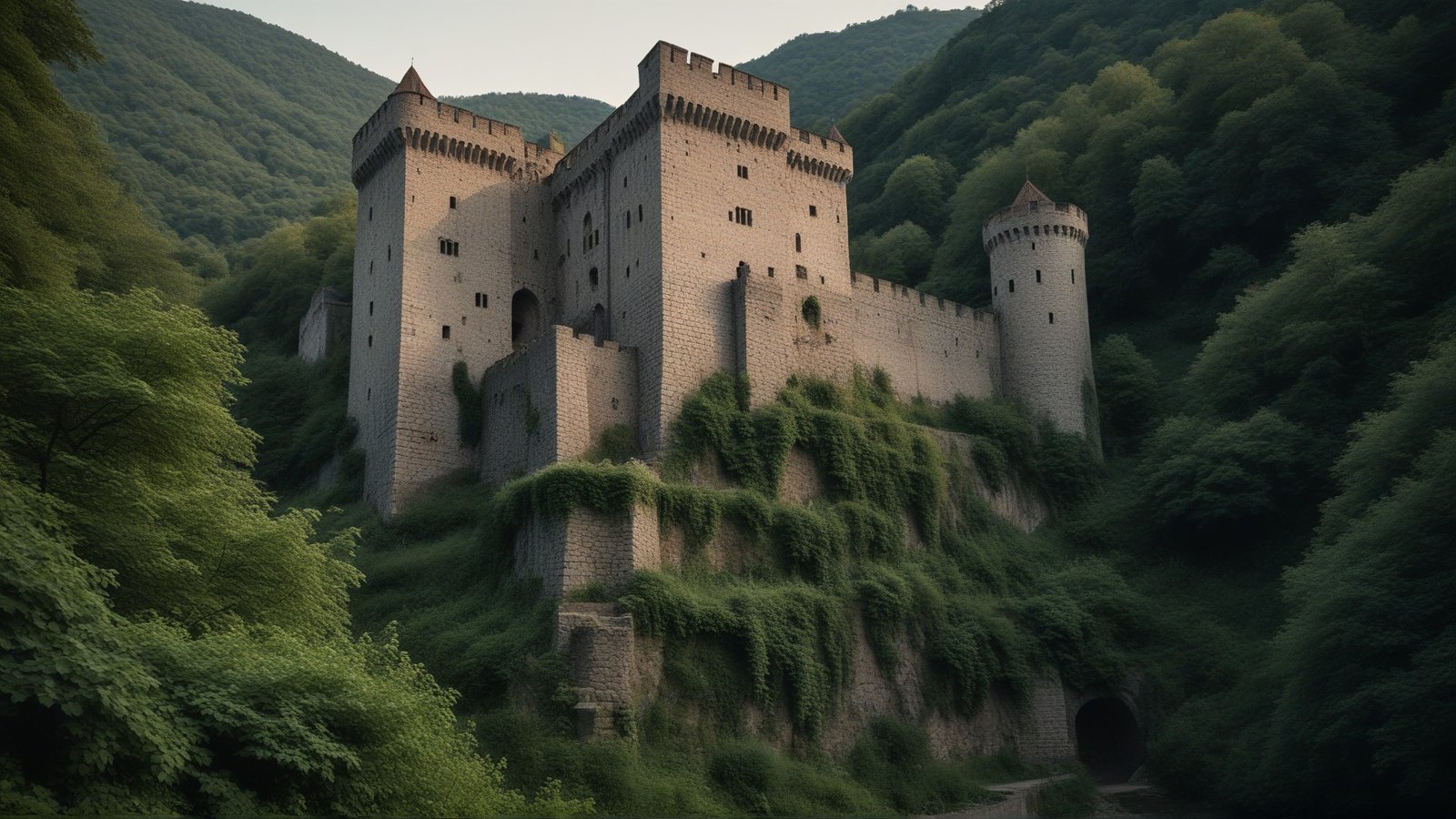
Historical Overview

**Historical Overview** The location under scrutiny is a stately castle, originally constructed in the 14th century as a fortified residence for a noble family. The castle served primarily as their ancestral home until the late 1700s when it was sold to a wealthy merchant who converted parts of it into an asylum. This shift in function may have contributed to the diverse range of reported paranormal phenomena, as the castle’s history expanded from that of a private residence to include that of an institution caring for mentally ill individuals. Several significant historical events could potentially relate to the haunting claims. In 1580, a tragic fire swept through the tower, resulting in numerous fatalities among the family and their servants. The woman in white apparition is often associated with this event, with some witnesses claiming she appears near the tower, seemingly distressed or pleading for help. Additionally, during the asylum’s operation (1795-1850), several patients died under mysterious circumstances, potentially contributing to the reported disembodied voices and eerie feelings experienced in various parts of the castle. The great hall, where a man in armor is often heard, was once the asylum’s dining area, suggesting that the entity may be linked to this period. Lastly, the nursery wing, where child’s laughter echoes, could be connected to a 1620 smallpox outbreak that claimed many young lives within the castle walls.Nestled in the heart of the English countryside lies the imposing Blackwood Castle, a fortified manor house with origins tracing back to the late 14th century. Constructed during the reign of Edward III by Sir Reginald Blackwood, the castle was originally designed as a defensive stronghold against frequent Scottish invasions. The tower, a prominent feature of the castle’s architecture, served as a lookout post, while the great hall functioned as a gathering place for feudal lords and their retinues. Throughout its history, Blackwood Castle has witnessed several tragic events that could potentially relate to its current paranormal reputation. In 1565, during the reign of Elizabeth I, a devastating fire swept through the castle’s nursery wing, resulting in the loss of life for several children of the noble Blackwood family. The blaze was so intense that it left scorch marks on the stone walls, which can still be seen today. Additionally, in 1645 during the English Civil War, the castle was besieged by Parliamentarian forces, leading to a bloody skirmish in which many lives were lost, including several members of the Blackwood family. These historical events may provide context for some of the haunting claims reported at the castle, such as the apparition of a woman in white near the tower and the child’s laughter in the nursery wing.
The Hauntings
Nestled within the Carpathian Mountains lies Poenari Castle, a historical site that has captivated both scholars and enthusiasts of the paranormal for centuries. While its imposing structure and rich history are notable attractions, it is the persistent reports of paranormal phenomena that have drawn visitors to its ruins since the 18th century. Witnesses report encounters with various entities at Poenari Castle, including a woman in white, a man in armor, and the disconcerting sound of a child’s laughter. According to accounts, these experiences often occur between dusk and dawn, with an increase in activity during stormy nights. Visitors claim that the woman in white appears suddenly, only to vanish as quickly, while the man in armor is said to pace the castle walls, his heavy footsteps echoing through the night. The laughter of a child, seemingly out of place within the castle’s somber atmosphere, allegedly sends shivers down the spines of those who hear it. Despite these claims, it remains uncertain whether these entities are indeed supernatural in nature or if they can be attributed to more mundane explanations.Poenari Castle, shrouded in the Carpathian Mountains, is not merely a historical site but also a locale where paranormal phenomena have been reported for centuries. Visitors and inhabitants alike have described various supernatural occurrences within its walls. Among these are apparitions of distinct entities: a woman dressed in white, often seen near the castle’s tower; a man clad in armor, heard echoing through the great hall; and an unsettling child’s laughter, allegedly emanating from the nursery wing. The frequency and intensity of these encounters seem to peak during the transitional periods between day and night, with stormy weather conditions amplifying their occurrence. According to accounts, these paranormal phenomena are not isolated incidents but rather persistent occurrences that have surfaced sporadically since the 18th century. While some visitors claim to experience multiple entities or sensations during a single visit, others report singular encounters spread over several decades of residence within the castle. The sheer duration and consistency of these claims, despite the passage of time and changes in castle inhabitants, contribute to the intrigue surrounding Poenari Castle’s haunted reputation.
Where is Poenari Castle located and how can I visit it?
Poenari Castle is situated in the Argeș County of Romania, near the town of Câlnic. It’s accessible by car or a short hike from the nearby village. The castle is open to visitors daily between 9 AM and 6 PM (or sunset), with an entry fee of approximately 10 Romanian Lei.
What is the historical background of Poenari Castle?
Poenari Castle was built in the 13th century as a citadel to protect the Transylvanian border. It played a significant role during the rule of Vlad III Dracula, who used it as a strategic fortress against the Ottoman Empire. The castle was abandoned after his death and fell into ruin.
What are some specific haunting claims associated with Poenari Castle?
Visitors have reported various paranormal experiences at Poenari Castle, including strange noises, cold spots, and feelings of being watched. Some claim to have seen apparitions resembling Vlad Dracula or his wife, while others report encountering ghostly children.
Have there been any notable evidence or investigations conducted at Poenari Castle?
Several paranormal investigation teams have visited Poenari Castle and reported unusual findings. In 2015, the Ghost Adventures crew claimed to have captured evidence of paranormal activity during their lockdown. However, these findings are not scientifically verified.
What is the cultural significance or media coverage of Poenari Castle?
Poenari Castle is culturally significant as a historical monument and a symbol of Romanian resistance against foreign invaders. It has gained international recognition due to its association with Vlad Dracula, who inspired Bram Stoker’s novel ‘Dracula.’ The castle has been featured in various documentaries, books, and films.
Phenomena Types : apparitions, disembodied voices, cold spots, eerie feelings
Specific Entities : woman in white seen near tower, man in armor heard in great hall, child’s laughter in nursery wing
Activity Patterns : most activity reported between dusk and dawn, increased reports during stormy nights
First Reported : first documented in 18th century by castle inhabitants
Frequency : sporadic with several reports per decade


