Oak Island Money Pit

Beneath its seemingly innocuous surface, Oak Island conceals a mystery that has ensnared generations.

Oak Island Money Pit – Data


  • Urban Legend Name: Oak Island Money Pit
  • Origin Location: Oak Island, Nova Scotia, Canada
  • First Mention Year: 1795
  • Peak Popularity: Late 20th century
  • Type: Cursed Object/Location

Oak Island Money Pit - Story

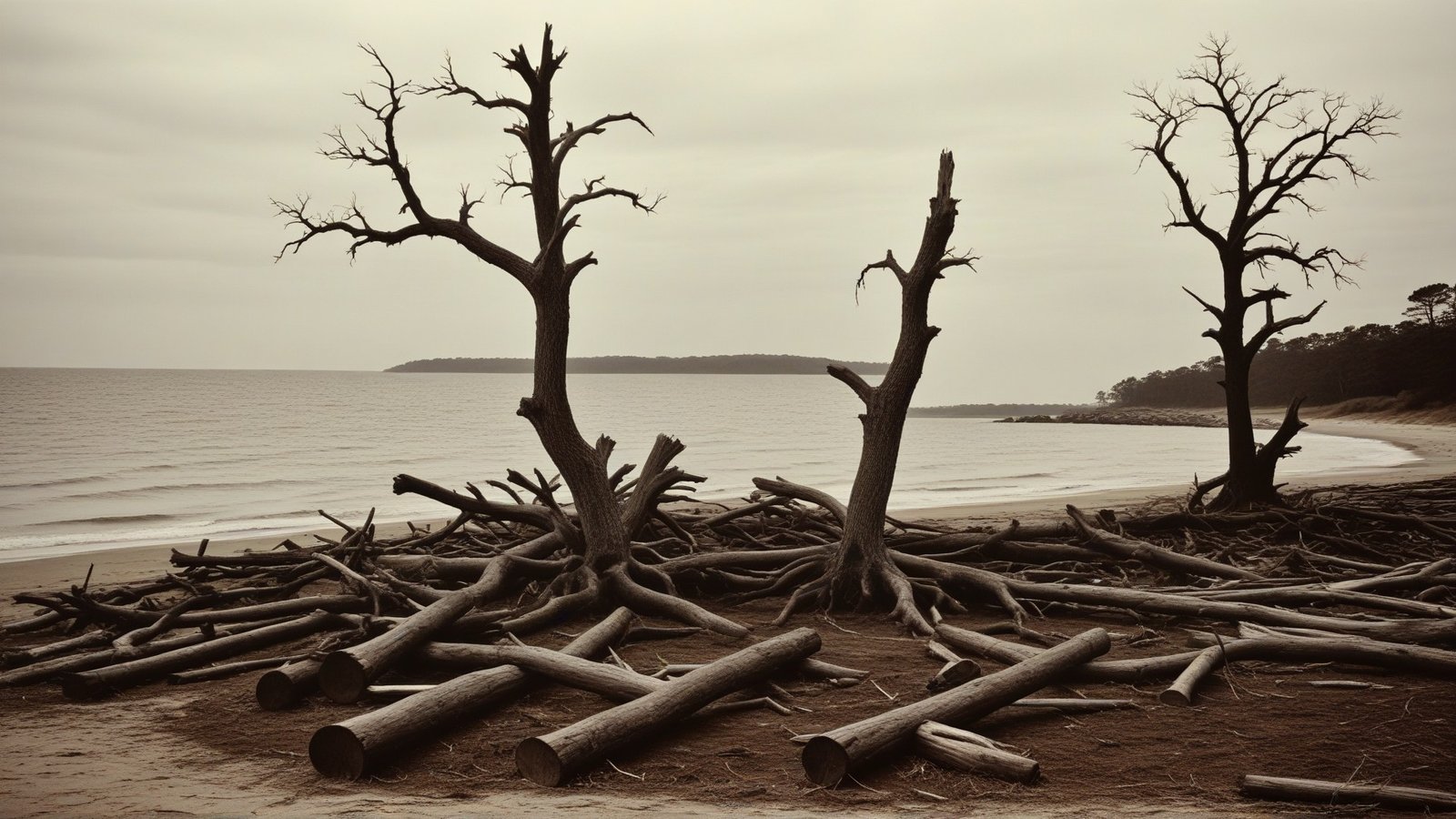
In the chill of a late autumn day, sometime in the late 1970s, young Timothy and his friends, the McAllisters, ventured onto the windswept shores of Oak Island. The boys, armed with shovels and curiosity, were drawn to an innocuous circular depression that seemed to beckon them from beneath the gnarled oak trees.
Timothy, the eldest at thirteen, took the lead as they began to dig. The earth yielded reluctantly, revealing layers of ancient oak logs and strange coconut fibers at varying depths. The boys exchanged excited glances; this was no ordinary hole in the ground. As they delved deeper, their hearts pounded with anticipation, echoing the rhythm of the distant sea.
Over time, their finds were astounding – pieces of metal, coins worn smooth by age, and a mysterious stone carved with symbols that danced just beyond comprehension. Yet, despite these tantalizing discoveries, no treasure trove greeted them. Instead, each find only deepened the mystery, like a siren’s call luring them further into the earth.
Beneath the seemingly innocuous surface of Oak Island, Timothy and his friends had indeed stirred something ancient and profound. As they stood there, shovels in hand, the wind whispering through the oaks, they felt it – an almost palpable sense that they were not alone in their quest. The island, with its secrets buried deep, had ensnared them, as it had generations before.
And so, under the vast Nova Scotian sky, their journey into the heart of Oak Island’s mystery began.

Origin

Here’s what we know about the Oak Island Money Pit legend: it first emerged in 1795 on a small island off Nova Scotia, Canada. The core narrative involves local boys discovering a circular depression, uncovering layers of oak logs and coconut fibers, and finding artifacts like pieces of metal, coins, and a mysterious stone without ever locating the supposed treasure.

The legend reached its peak popularity in the late 20th century, drawing countless treasure hunters to Oak Island. What makes it spread is simple: human curiosity, greed, and our fascination with hidden treasures. Despite extensive efforts, no one has found definitive proof of the treasure’s existence, leaving generations ensnared by its enigmatic appeal.

From a folklore perspective, this legend reflects our collective desire for wealth and mystery. It’s also notable that while many legends fade over time, this one has persisted for over two centuries. The cultural context is important too – it’s deeply ingrained in Nova Scotian folklore, with the island itself becoming an iconic symbol of intrigue.

There are no primary sources confirming the presence of treasure, but the feeling of truth persists despite lack of evidence.


This contradiction is what makes the Oak Island Money Pit legend so enduring and fascinating. It’s a testament to our human capacity for wonder and belief, even in the face of uncertainty.

Media Presence of Oak Island Money Pit

Faq about Oak Island Money Pit

Title: The Oak Island Mystery

Author: Douglas G. Simmonds

Year: 1978

Movie: The Curse of Oak Island Year: 2014

Name: The Curse of Oak Island

Episode: Pilot

Year: 2014

Yes, the Oak Island Money Pit is a real location on Oak Island, Nova Scotia, Canada.

The legend of the Oak Island Money Pit originated on Oak Island, Nova Scotia, Canada in the late 18th century.

Artifacts found include pieces of metal, coins, a mysterious stone, and layers of oak logs and coconut fibers.

No, despite extensive efforts and artifacts found, no significant treasure has been discovered.

The most popular theory suggests it was a hiding place for pirate treasure, but other theories include it being a natural formation or an ancient Native American site.