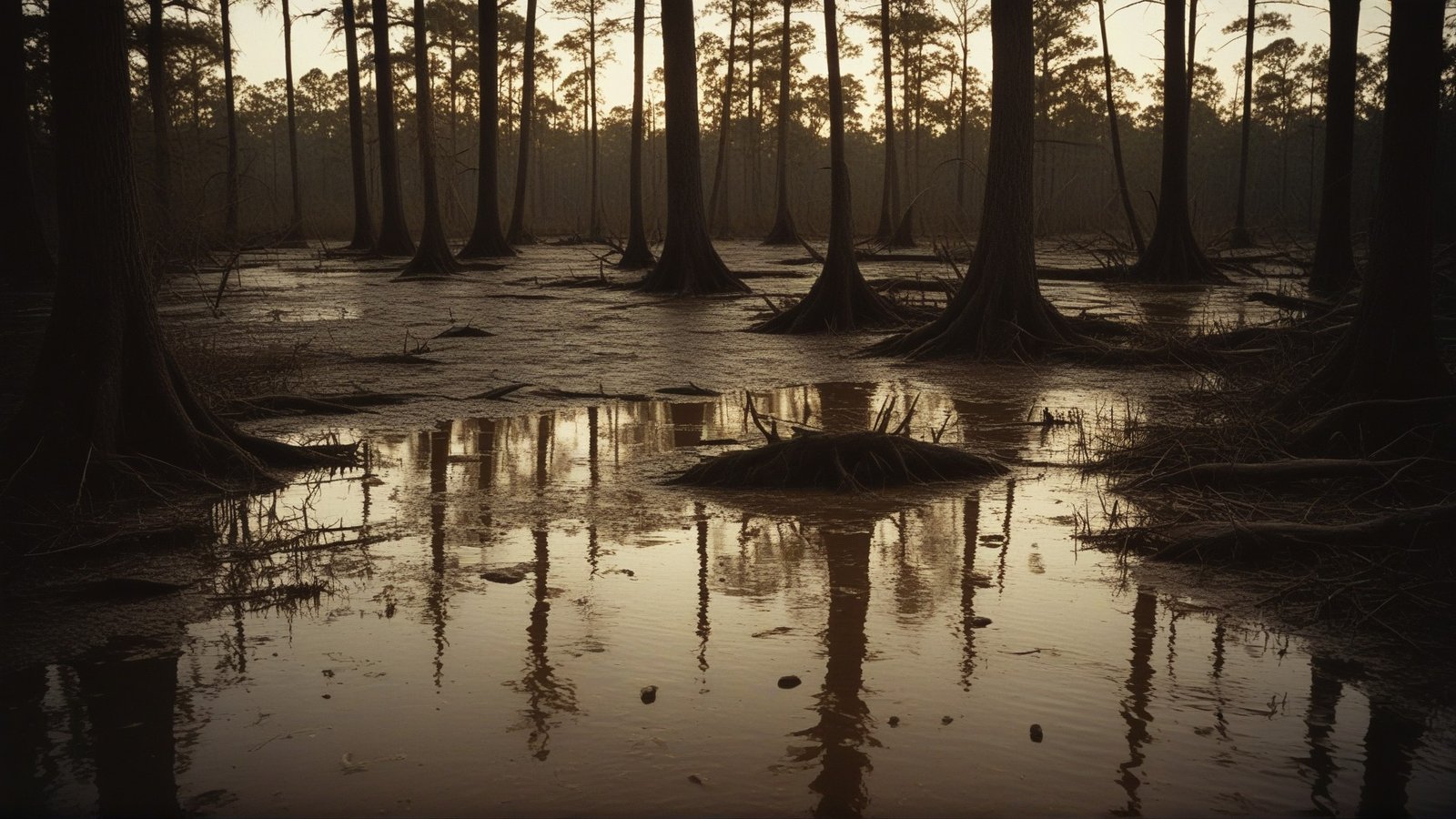
Madam Koi Koi
The murky waters of the Louisiana swamps hide more than just their secrets.
Madam Koi Koi – Data
- Urban Legend Name: Madam Koi Koi
- Origin Location: Louisiana swamps
- First Mention Year: Unknown
- Peak Popularity: 1950s-1970s
- Type: Cryptid
TheUrban
Where modern folklore meets the unexplained
Researcher of urban legends, contemporary folklore, and the unexplained.
Madam Koi Koi - Story
In the sultry summer of sometime in the late 1970s, little Marie and her friends played near the edge of the Bayou Lafourche. The sun dipped low, casting long, dancing shadows through the cypress trees. Suddenly, a strange, guttural croaking echoed from the murky depths, sending shivers down their spines.
Marie, with her fiery red hair and freckled cheeks, turned to the others. “Y’all hear that?” she asked, eyes wide. But before anyone could answer, little Jacques, his dark skin glistening with sweat, vanished into thin air. One moment he was there, the next, gone, as if swallowed by the swamp itself.
The children stared at each other, silent and still, until Marie’s older brother, Henri, came searching for them. “Where’s Jacques?” he demanded, his voice laced with worry. Panic surged through the group like a sudden storm surge when they realized their friend was missing.
Henri led the search party into the heart of the swamp, following an eerie trail of giant, mysterious footprints. They were unlike any animal tracks Henri had seen before – massive, webbed, and leading straight into the darkest part of the bayou.
As they ventured deeper, the strange croaking grew louder, more insistent. Suddenly, Henri stopped, his heart pounding in his chest. “Mon Dieu,” he whispered, pointing at a colossal, slimy footprint. “That’s no ordinary toad… That’s Madam Koi Koi.”
The children huddled together, fear etched onto their faces as the murky waters around them seemed to come alive with an ancient, malevolent presence. The legend of Madam Koi Koi had been passed down through generations, a chilling reminder of the dangers lurking in Louisiana’s swamps. And now, it felt all too real.
Origin
Here’s what we know about the Madam Koi Koi legend. It’s a Louisiana cryptid tale deeply rooted in the state’s bayous and swamps. The exact origin is unknown, but it gained traction during the mid-20th century, peaking between the 1950s and 1970s. The core narrative revolves around children disappearing near swamps, leaving behind mysterious footprints belonging to a monstrous toad named Madam Koi Koi. What’s interesting from a folklore perspective is how this legend reflects local fears about children wandering into dangerous territories. It serves as a cautionary tale, echoing older stories of monsters lurking in uncharted lands. The murky waters of Louisiana swamps indeed hide more than just their secrets, embodying the unknown and unsettling aspects of these environments. Consistently, Madam Koi Koi is portrayed as a giant toad, often murderous, with no known method of killing or devouring its victims. This inconsistency adds to the legend’s eerie allure but also raises questions about its factual basis. Despite this, the tale persists, resonating with regional cultural narratives and evoking a sense of dread that transcends logic.
Media Presence of Madam Koi Koi
Faq about Madam Koi Koi
Book About Madam Koi Koi
Movie About Madam Koi Koi
Tv Show About Madam Koi Koi
Is Madam Koi Koi real?
No, there is no scientific evidence to support the existence of a giant murderous toad in Louisiana swamps.
Where did the Madam Koi Koi legend originate?
The earliest known version of the Madam Koi Koi legend is from Louisiana’s bayou folklore, with no specific origin date.
Are there any known victims or incidents associated with Madam Koi Koi?
No verified cases of children disappearing due to a giant toad exist. The legend is purely folklore.
When was Madam Koi Koi most popular?
The legend reached peak popularity in the 1950s-1970s.
Has Madam Koi Koi appeared in any media?
Yes, the legend has been featured in various books, movies, and TV shows like ‘Swamp Thing’ (1982) and ‘Bayou Cavern’ (2014).