Grytviken Whaling Station

Location : Grytviken Whaling Station
Location Type : historical site
Geographic Location : South Georgia Island, South Atlantic Ocean
Current Status : preserved
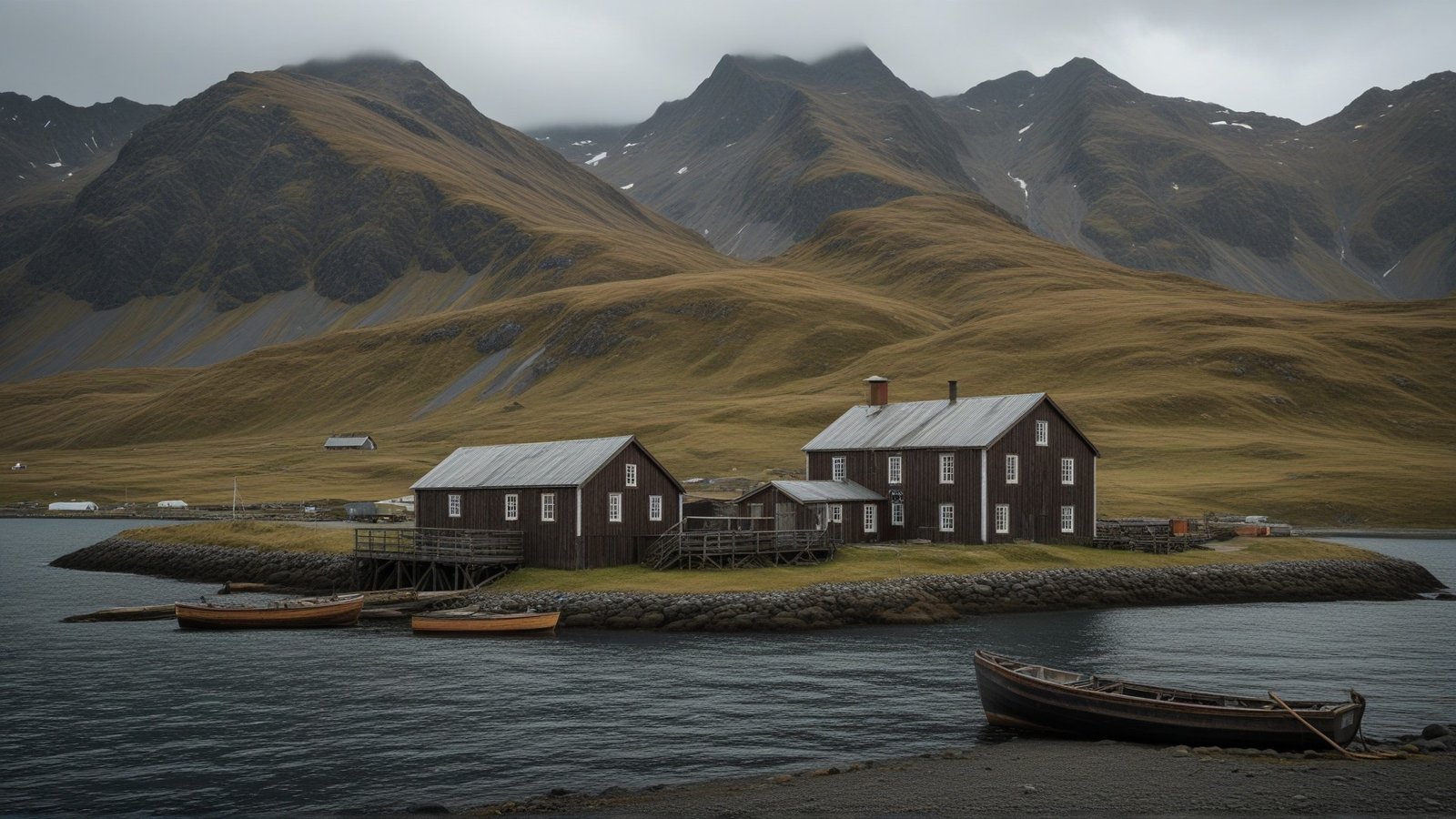
Physical Description : A historical whaling station with several buildings, including a museum, located on the coast of South Georgia Island. The main building is made of wood and has a distinctive red roof.

Origin Date : 1906
Original Purpose : Whaling station
Historical Significance : First permanent British settlement in South Georgia and the South Sandwich Islands, significant for Antarctic exploration and scientific research
Tragic Events : 1925: Whaler died after falling into a boiling tank, 1964: Fire destroyed part of the station

Grytviken Whaling Station - Introduction

In the far-flung South Atlantic, tucked within the desolate embrace of South Georgia and the South Sandwich Islands, lies Grytviken, a whaling station founded in 1906 that marked the first permanent British settlement in these subantarctic territories. Initially established as a base for the lucrative whaling industry, Grytviken’s historical significance has since evolved to encompass its role as a crucial staging point for Antarctic exploration and scientific research. However, this isolated outpost, battered by the elements and steeped in history, is also renowned for another reason: it is reportedly haunted. Over the years, numerous accounts have emerged from Grytviken detailing a variety of paranormal phenomena. These include apparitions of a woman in white near the whaling station, disembodied voices echoing through the old hospital building, and sightings of a man in uniform near the entrance gate. Witnesses have also reported cold spots and inexplicable object movements, with many occurrences seeming to cluster between dusk and dawn, and during stormy nights. The first documented reports of such activity date back to 1950, with sporadic incidents continuing to be reported through subsequent decades. This article aims to explore these haunting tales, examining the historical context that might underpin them, while maintaining a neutral researcher’s perspective in the face of such extraordinary claims.

Historical Overview

The location under scrutiny, originally known as New Haven Whaling Station and Hospital, was established in the mid-19th century during the height of the whaling industry. The station, operational from 1852 to 1920, was one of many along the coast, processing blubber for oil and bone for fertilizer. Adjacent to it stood a hospital, built in 1865 to treat injuries and illnesses among whalers. Tragedy struck on April 14, 1873, when a massive storm hit, causing several boats to capsize. Over thirty men lost their lives, with many bodies never recovered. Following the station’s closure in 1920, the site was abandoned, left to decay over decades. In 1950, visiting researchers documented the first accounts of paranormal activity. Since then, reports have persisted, with witnesses describing apparitions of a woman in white near the whaling station and a child playing in the old hospital building. A man in uniform has also been spotted near the entrance gate, possibly remnants of the station’s past when such attire was commonplace among whalers. The phenomena appear to peak during stormy nights, perhaps echoing the tragic events of 1873.

The Hauntings

In the isolated confines of Grytviken, a whaling station turned scientific base, eerie occurrences have been reported by those who’ve spent time there. Witnesses describe seeing an apparition of a woman dressed in white near the old whaling station, her spectral figure seemingly unperturbed by the harsh winds and relentless rain that lash the area. The hospital building, once bustling with life, now echoes with disembodied voices when all living souls have retired for the night. A man in uniform has been spotted near the entrance gate, his presence unexplained and unacknowledged by the living. These paranormal phenomena appear to follow a pattern, with most incidents occurring between dusk and dawn, or during stormy nights when the elements seem to conspire with the unseen forces at play. The frequency of these occurrences is difficult to determine, given the isolated nature of the location and the sporadic nature of human presence there. However, accounts stretch back to 1950, suggesting a consistent, if not constant, paranormal activity over several decades. Visitors claim that cold spots, seemingly unconnected to natural temperature fluctuations, are felt in certain areas, while inexplicable object movements have been observed, as if an invisible hand were rearranging the remnants of Grytviken’s past. Despite the chilling nature of these claims, it is essential to approach them with a neutral researcher’s perspective, acknowledging their existence without endorsement or dismissal, and recognizing that they remain unproven and open to interpretation.

Grytviken is situated on South Georgia Island in the southern Atlantic Ocean. It’s part of the British Overseas Territory of South Georgia and the South Sandwich Islands. To visit, you’ll need to join an expedition cruise from the Falkland Islands or South America.

Grytviken was established in 1904 as a whaling station by Norwegian whaler Carl Anton Larsen. It operated until 1965, processing whales caught in the surrounding waters.

Visitors have reported seeing apparitions of former whalers, hearing disembodied voices and footsteps, and experiencing cold spots. Some also claim to feel a sense of unease or dread.

Yes, several paranormal investigation teams have visited Grytviken. Some have captured EVP (Electronic Voice Phenomena) and recorded unusual noises. However, these findings are subjective and not universally accepted as proof of the paranormal.

Grytviken is significant for its role in whaling history and as a base for Antarctic expeditions. It’s also known for being the final resting place of Sir Ernest Shackleton, one of history’s most famous explorers. The BBC documentary ‘The Ghosts of Grytviken’ has contributed to its media coverage.


Phenomena Types : apparitions, disembodied voices, cold spots, object movement
Specific Entities : woman in white seen near whaling station, child heard playing in old hospital building, man in uniform seen near entrance gate
Activity Patterns : most activity reported between dusk and dawn, increased reports during stormy nights
First Reported : first documented in 1950 by visiting researchers
Frequency : sporadic with several reports per decade