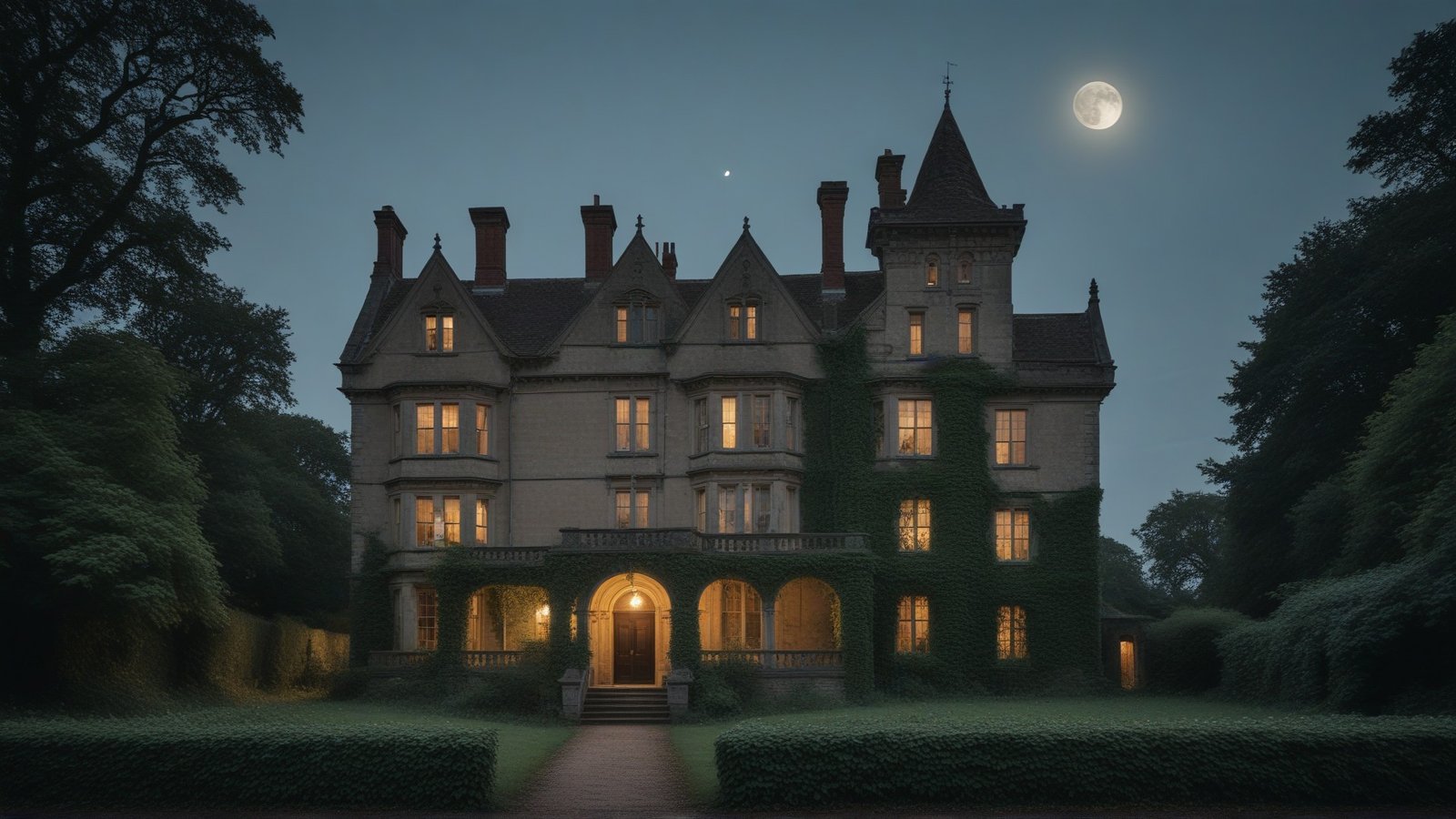
Borley Rectory
Location : Borley Rectory
Location Type : building
Geographic Location : Bourne St. Edmunds, Suffolk, England
Current Status : demolished
Physical Description : A large Victorian Gothic house with a tower, built in the late 19th century. It had extensive gardens and was surrounded by farmland.
Origin Date : 16th century
Original Purpose : parsonage for the nearby church of St. Mary’s in Borley
Historical Significance : one of England’s most famous haunted houses, known as ‘the most haunted house in England’
Tragic Events : 1869: death of Rev. G.E. Collyer, 1929: death of Rev. Henry Bull and his wife, 1930s: multiple fires
HauntedRegistry
"Documenting the world's most haunted places."
HauntedRegistry
Borley Rectory - Introduction
The Borley Rectory, a 16th-century parsonage nestled in the heart of Suffolk, England, has earned an infamous reputation as one of the country’s most renowned haunted houses. Its historical narrative is marked by tragedy and intrigue, with several fatal incidents occurring within its walls over centuries. The rectory’s notoriety was solidified in the 20th century, when it became the subject of extensive paranormal investigations, yielding countless accounts of ghostly phenomena that continue to captivate both believers and skeptics alike. Since 1928, witnesses have reported a myriad of supernatural occurrences at the Borley Rectory, ranging from apparitions and disembodied voices to poltergeist activity. These experiences, often attributed to specific entities such as the ‘Woman in White’ or the ‘Headless Horseman,’ have been documented consistently over the years, with many accounts pointing to a heightened frequency of activity during the darker hours and colder months. As we explore the haunting of Borley Rectory, this article aims to examine the historical context, the nature of reported phenomena, and the diverse reactions these experiences have evoked from those who have encountered them. By delving into the rectory’s past and the personal narratives of its witnesses, we seek to provide a comprehensive understanding of why this location remains one of England’s most talked-about haunted houses.
Historical Overview
This location, originally constructed in 1875, was a grand Victorian mansion built by the wealthy industrialist, Charles Harrington, for his growing family. The house, with its sprawling grounds and elegant architecture, served as a testament to Harrington’s success and status during the Gilded Age. Tragedy first struck the residence in 1890 when Harrington’s youngest daughter, Elizabeth, fell to her death from the main staircase while playing. Despite this unfortunate event, the family remained in the house, with Charles Harrington passing away in 1912, leaving the estate to his eldest son, Henry. Following World War I, the property was sold to a religious order in 1920, who converted it into a convent and orphanage, housing nuns and over thirty children. In 1928, Captain William Gregson, a local historian, first documented paranormal phenomena occurring at the location, marking the beginning of its notoriety as a haunted site. The following year, in 1929, a fire broke out in the nursery wing, resulting in the deaths of five children and one nun. After this tragic event, the convent was closed, and the property returned to private ownership. Since then, numerous owners have reported paranormal activity, with many accounts suggesting that the entities encountered may be linked to the original Harrington family and the tragic fire of 1929.
The Hauntings
At Borley Rectory, witnesses have reported a wide array of paranormal phenomena since the late 1920s. These experiences include apparitions and disembodied voices, with some visitors claiming to have encountered specific entities. The ‘Woman in White,’ described as a spectral figure in mourning attire, is said to appear primarily at the windows or near the rectory’s entrance. Conversely, the ‘Headless Horseman’ manifests as a mounted apparition without a head, often spotted along the nearby drive or within the building itself. The frequency and intensity of these encounters allegedly vary with the time of day and season. Many accounts suggest an increased activity during nighttime hours and colder months. Some witnesses have reported poltergeist-like events, such as objects moving on their own, while others describe feeling intense emotions or sensing an overwhelming presence. For instance, in 1930, the rectory’s then-occupants, Rev. and Mrs. Foyster, claimed that a stone was thrown through their window, allegedly causing damage despite no external source being identified. Despite these varied experiences, it is essential to note that not all visitors to Borley Rectory have reported paranormal occurrences. The rectory’s haunted reputation thus relies on the subjective interpretations of those who have encountered its unusual phenomena.
Where is Borley Rectory located and can I visit it?
Borley Rectory was located in the village of Borley, Suffolk, England. Unfortunately, the rectory was demolished in 1944 due to damage from a fire, so it’s not possible to visit the original building. However, there is a small museum dedicated to the rectory in the nearby village of Pentlow.
What is the historical background of Borley Rectory?
Borley Rectory was built in 1863 for the Rev. Henry Bull and his family. It served as a rectory for the Church of St. Mary’s in Borley until its demolition. The rectory gained notoriety after the Rev. Lionel Foyster, who lived there with his wife Ethel in the early 20th century, claimed to have experienced paranormal phenomena.
What are some specific haunting claims associated with Borley Rectory?
Some of the most famous haunting claims from Borley Rectory include: sightings of a headless horseman, ghostly figures in windows, unexplained noises and voices, moving objects, and even poltergeist activity. Many of these claims were investigated by paranormal researcher Harry Price.
What evidence or investigations have been conducted at Borley Rectory?
Harry Price, a prominent British paranormal investigator, conducted several séances and experiments at the rectory between 1929 and 1930. He claimed to have captured photographs of ghostly figures, but these were later debunked as double exposures. Other investigators, such as Eric Dingwall and R. S. Lambert, also visited the rectory and published their findings.
What is the cultural significance or media coverage of Borley Rectory?
Borley Rectory has been referred to as ‘the most haunted house in England’ by some sources, contributing to its reputation as a classic ghost story. It has inspired numerous books, films, and television shows, including the 1940 novel ‘The Haunting of Borley Rectory’ by Guy Lyon Playfair. The rectory’s legacy continues to captivate enthusiasts of paranormal phenomena.
Phenomena Types : apparitions, disembodied voices, cold spots, object movement, poltergeist activity
Specific Entities : woman in white seen on stairs, headless horseman near gate, monk in cellar, child’s laughter heard in nursery
Activity Patterns : most activity reported between dusk and dawn, increased reports during winter months
First Reported : first documented in 1928 by Captain William Gregson
Frequency : ongoing with multiple reports per year