Bloody Mary
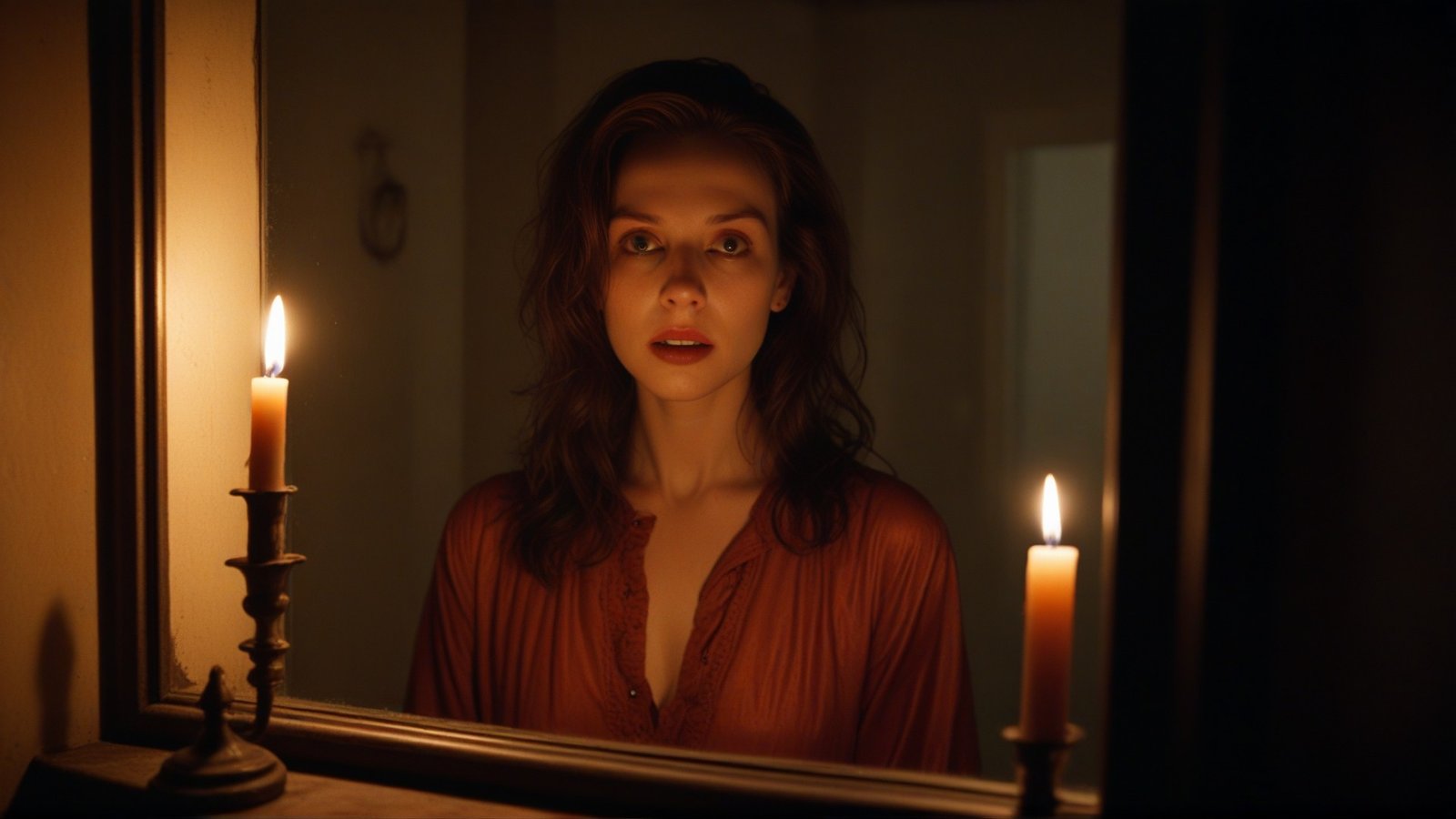
In the dim light of a single candle, her reflection began to change...
Bloody Mary – Data
- Urban Legend Name: Bloody Mary
- Origin Location: United States (originated from various regional versions)
- First Mention Year: Unknown
- Peak Popularity: 1960s-1980s
- Type: Ghost
TheUrban
Where modern folklore meets the unexplained
Researcher of urban legends, contemporary folklore, and the unexplained.
Bloody Mary - Story
In the quiet, unassuming town of Hollow Creek, nestled between the Appalachian foothills and the whispers of the Ohio River, lived a curious girl named Elizabeth. Sometime in the late 1970s, amidst the humdrum of small-town life, she stumbled upon an old, yellowed newspaper clipping tucked away in her grandmother’s attic. The article spoke of a chilling figure from American folklore, one that could be summoned by candlelight and the chanting of her name: Bloody Mary.
Elizabeth, with the reckless abandon of youth, decided she had to see for herself if this legend held any truth. She procured an old, flickering candle from Mrs. Baker’s general store and stood before her grandmother’s antique mirror in the dimly lit upstairs bathroom. The ritual was simple yet eerie: light the candle, stand before the mirror, and recite ‘Bloody Mary’ thirteen times.
As she chanted, her reflection began to change. The image in the glass grew distorted, twisted into a figure that bore little resemblance to Elizabeth. The face was contorted with rage, the clothing stained crimson. A shiver ran down Elizabeth’s spine as she realized she had summoned Bloody Mary herself. The legend was real, and now, it stood before her, awaiting her wish or her doom.
Origin
Here’s what we know about the Bloody Mary legend: it’s an American ghost story, likely originating from various regional versions across the United States, with its earliest mention unknown. The tale involves a ritual to summon Bloody Mary—lighting a candle and chanting her name thirteen times before a mirror—and she appears with a distorted face and bloodstained clothing, either granting wishes or killing the summoner. The legend gained significant popularity during the 1960s to 1980s. Its widespread appeal and regional variations make it fascinating from a folklore perspective. It reflects cultural anxieties about the supernatural, particularly female spirits that can embody both benevolence and malevolence. Despite its popularity, there’s no scientific evidence supporting Bloody Mary’s existence. Yet, the legend persists, fueled by our collective fascination with the unknown and the chilling atmosphere it evokes—”In the dim light of a single candle, her reflection began to change…”
Media Presence of Bloody Mary
Faq about Bloody Mary
Book About Bloody Mary
Movie About Bloody Mary
Tv Show About Bloody Mary
Is Bloody Mary real?
There’s no scientific evidence supporting the existence of Bloody Mary as a real entity.
Where did the Bloody Mary legend originate?
The exact origin is unknown, but it’s believed to have emerged from various regional folktales in the United States during the early 20th century.
What is the most common version of the Bloody Mary legend?
The most widespread version involves a candlelit mirror ritual, with Bloody Mary appearing and either granting wishes or killing the summoner.
Are there any verified incidents involving Bloody Mary?
No verified incidents exist. All reported cases are anecdotal and lack empirical evidence.
Which popular media appearances feature the Bloody Mary legend?
Candyman’ (1992), ‘The Conjuring 2’ (2016), and ‘Veronica’ (2017) are notable examples.