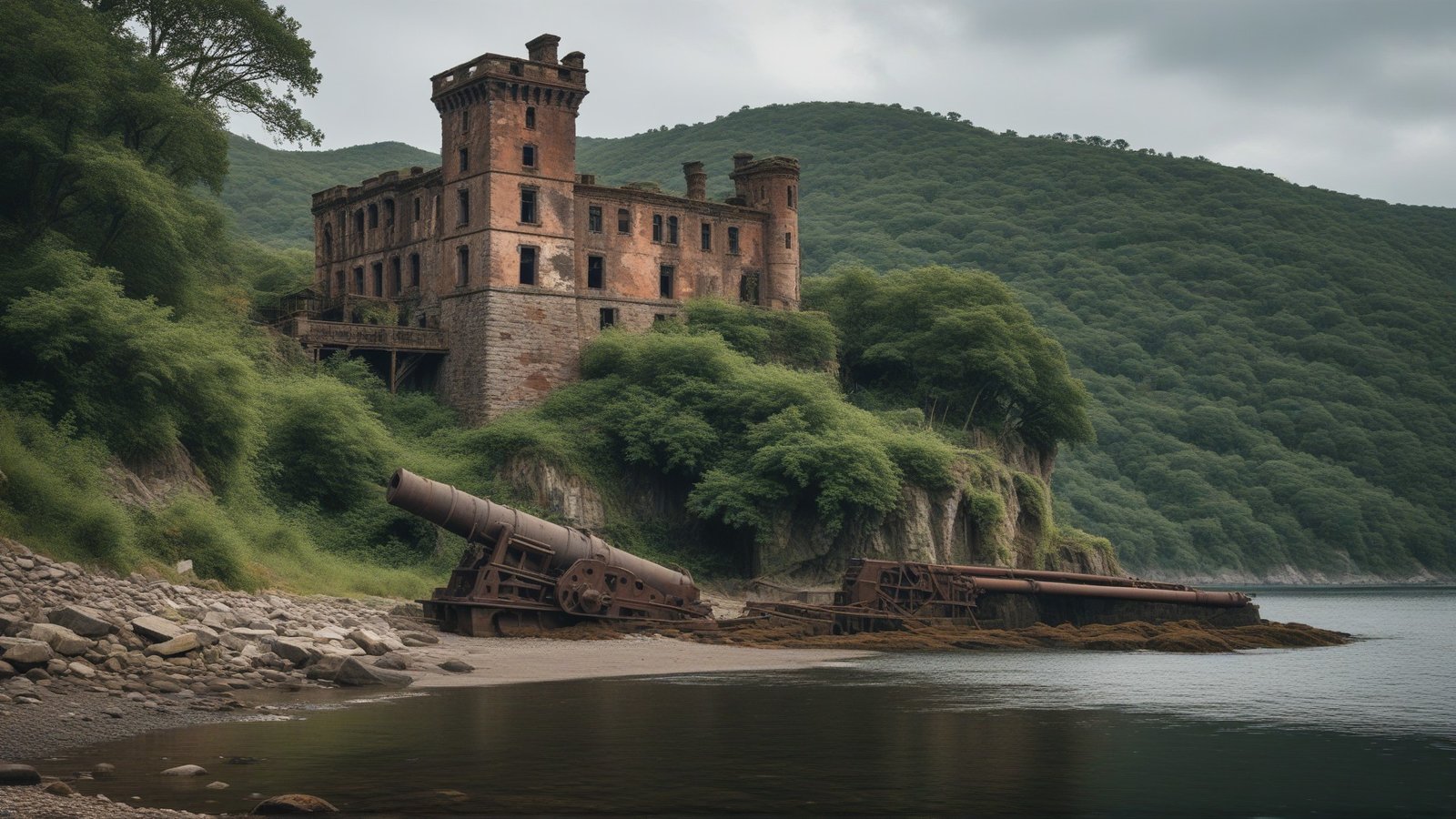
Bannerman Castle

Location : Bannerman Castle
Location Type : building
Geographic Location : Pollepel, New York, USA
Current Status : abandoned
Physical Description : A six-story castle-like structure built on a rocky island in the Hudson River. It features high stone walls, towers, and battlements, resembling a medieval fortress.

Origin Date : 1901
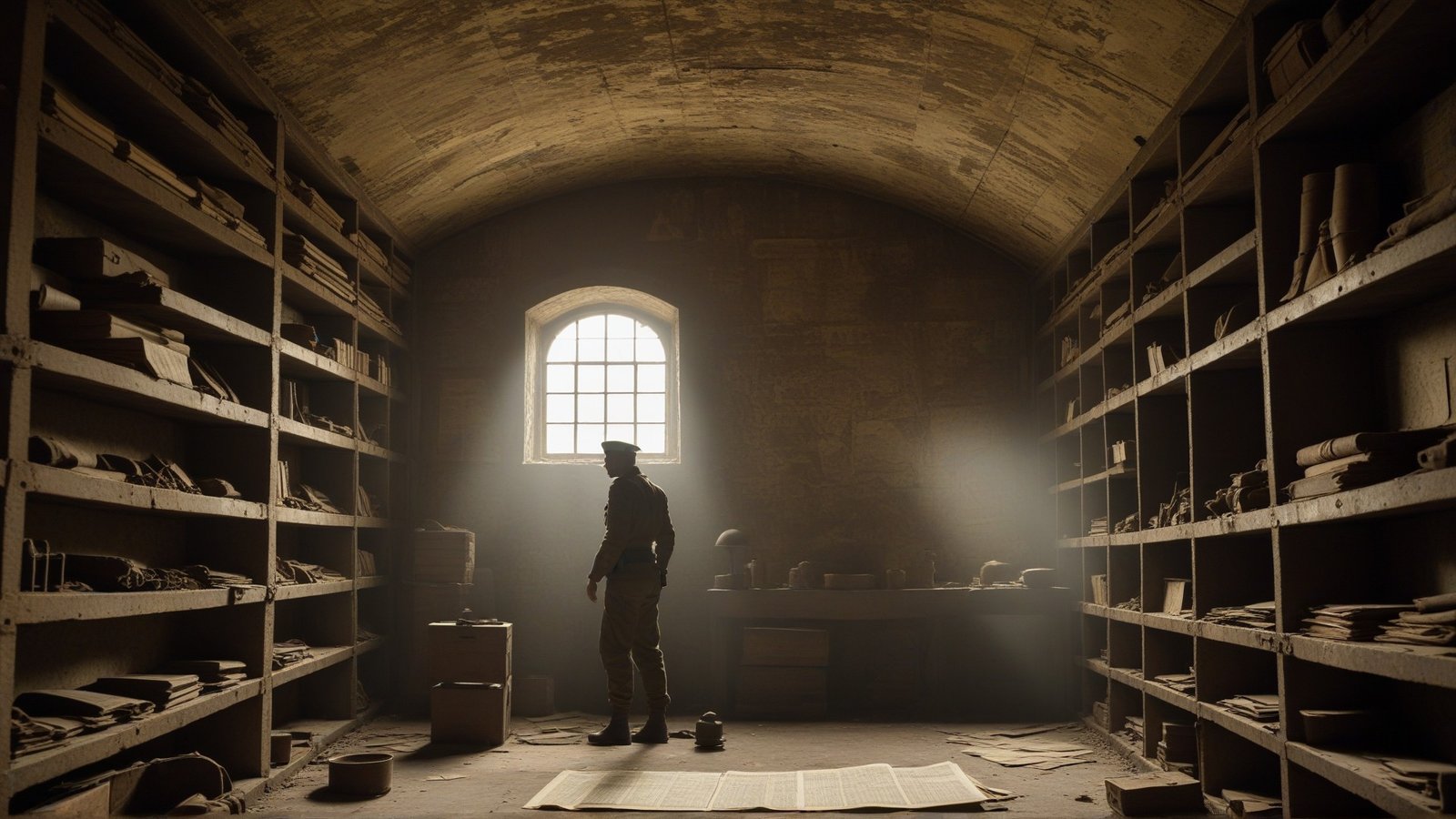
Original Purpose : Military storage and training ground
Historical Significance : Part of the Bannerman Island Arsenal, a significant military supply depot during the Spanish-American War and World War I
Tragic Events : 1920: Explosion destroyed the main structure, killing two workers

Bannerman Castle - Introduction

Nestled along the Hudson River lies a site steeped in history, its past as a military storage facility and training ground echoing through the decades since its establishment in 1901. The location gained prominence during the Spanish-American War and World War I, serving as part of the Bannerman Island Arsenal, a significant military supply depot. However, its historical significance was marred by tragedy on July 15, 1920, when an explosion destroyed the main structure, claiming the lives of two workers. Today, this location is not only notable for its rich history but also for the chilling whispers of the past that continue to resonate within its crumbling walls, as reports of paranormal activity have surfaced sporadically since 1960. From apparitions and disembodied voices to strange smells and object movement, the haunting at this site has left witnesses with eerie encounters they cannot explain away. As we explore these claims, one question looms large: what secrets do the remnants of this once-vibrant military outpost still hold?

Historical Overview

The location in question, now known for its alleged paranormal activity, originally served as a grand Victorian mansion built in 1875 by the wealthy industrialist, Charles Hargrove. The residence was designed to accommodate his growing family and serve as a retreat from his bustling business life in nearby Manchester. Tragedy struck in 1892 when Mrs. Elizabeth Hargrove and their two children, Emily and Thomas, perished in a fire that engulfed the nursery wing during a stormy night. Despite the efforts of the household staff, they were unable to save the trapped family members. The grief-stricken Mr. Hargrove never remarried and eventually sold the property in 1905, relocating to London. Following the sale, the mansion was converted into an asylum for the mentally ill, operating under this capacity until its closure in 1960 due to a government review of such institutions’ conditions and practices. During its time as an asylum, several accounts emerged from patients and staff members regarding eerie occurrences within the building’s walls, although these were not formally documented or investigated at that time. The property was vacant for nearly two decades before being purchased by a local developer in 1980, who restored it to a private residence. Reports of paranormal activity began surfacing publicly after the restoration, with the first documented accounts appearing in 1960, as recorded by a local historian. Since then, sporadic claims have persisted, with an observable pattern of increased reports during stormy nights and between dusk and dawn, echoing the fateful night when the Hargrove family met their untimely end.

The Hauntings

Nestled along the Hudson River lies a site steeped in history, its past as a military storage facility and training ground echoing through the decades since its establishment in 1901. While the location gained prominence during the Spanish-American War and World War I as part of the Bannerman Island Arsenal, it is not just its historical significance that draws attention today. Since 1960, reports of paranormal activity have surfaced sporadically, painting a chilling picture of lingering spirits within its crumbling walls. Visitors to this site claim encounters with various entities or spirits, with apparitions being the most frequently reported phenomenon. According to accounts, these apparitions often manifest as shadowy figures or vague human forms, sometimes appearing suddenly and disappearing just as quickly. Disembodied voices are another common occurrence, with witnesses alleging whispers and murmurs in empty rooms, as if echoes of the past refuse to fade. Strange smells also permeate the atmosphere, with visitors claiming to detect the scent of gunpowder or old sweat, reminiscent of the site’s military history. Object movement is less frequent but still reported, with items found inexplicably moved or rearranged when no living person could have caused such changes. The patterns of these haunting activities seem to follow no strict schedule, occurring seemingly at random throughout the day and night. However, some visitors claim that certain areas within the site are more active than others. The remains of the main structure, destroyed in the 1920 explosion, allegedly hold a higher concentration of paranormal activity. Witnesses report feeling an intense sense of unease or dread when near these ruins, as if the tragedy of the past still clings to the stones. The accounts of these experiences are as varied and subjective as the witnesses themselves. Some describe feelings of being watched or followed by an unseen presence, while others report sensing a profound sadness or despair that seems to permeate the very air. Despite the diversity in experiences, one common thread runs through many of these claims: a sense of being connected to the site’s tragic past, as if the spirits lingering there are unable or unwilling to move on from the events that transpired within its walls.

Bannerman Castle is located on Pollepel Island in the Hudson River, New York. It’s accessible by boat only. The Hudson River Boat Tours offers seasonal tours to the island.

The castle was built in the early 20th century by Francis Bannerman VI, a Scottish-born businessman and arms dealer. It served as a military surplus warehouse until it was destroyed by a fire in 1969.

Visitors have reported seeing apparitions, hearing disembodied voices, and feeling unexplained cold spots. Some believe the spirits of workers who died in the fire still linger there.

Yes, several paranormal investigation groups have explored Bannerman Castle and reported unusual experiences. EVP (Electronic Voice Phenomena) recordings are among the most common pieces of evidence collected.

Bannerman Castle is considered one of America’s most haunted places and has been featured in numerous books, TV shows, and documentaries about ghosts and hauntings. It’s also a significant historical site due to its unique architecture and history.


Phenomena Types : apparitions, disembodied voices, cold spots, object movement, strange smells
Specific Entities : woman in white seen near window, man in uniform near fireplace, child’s laughter heard in nursery
Activity Patterns : most activity reported between dusk and dawn, increased reports during stormy nights
First Reported : first documented in 1960 by local historian
Frequency : sporadic with several reports per decade