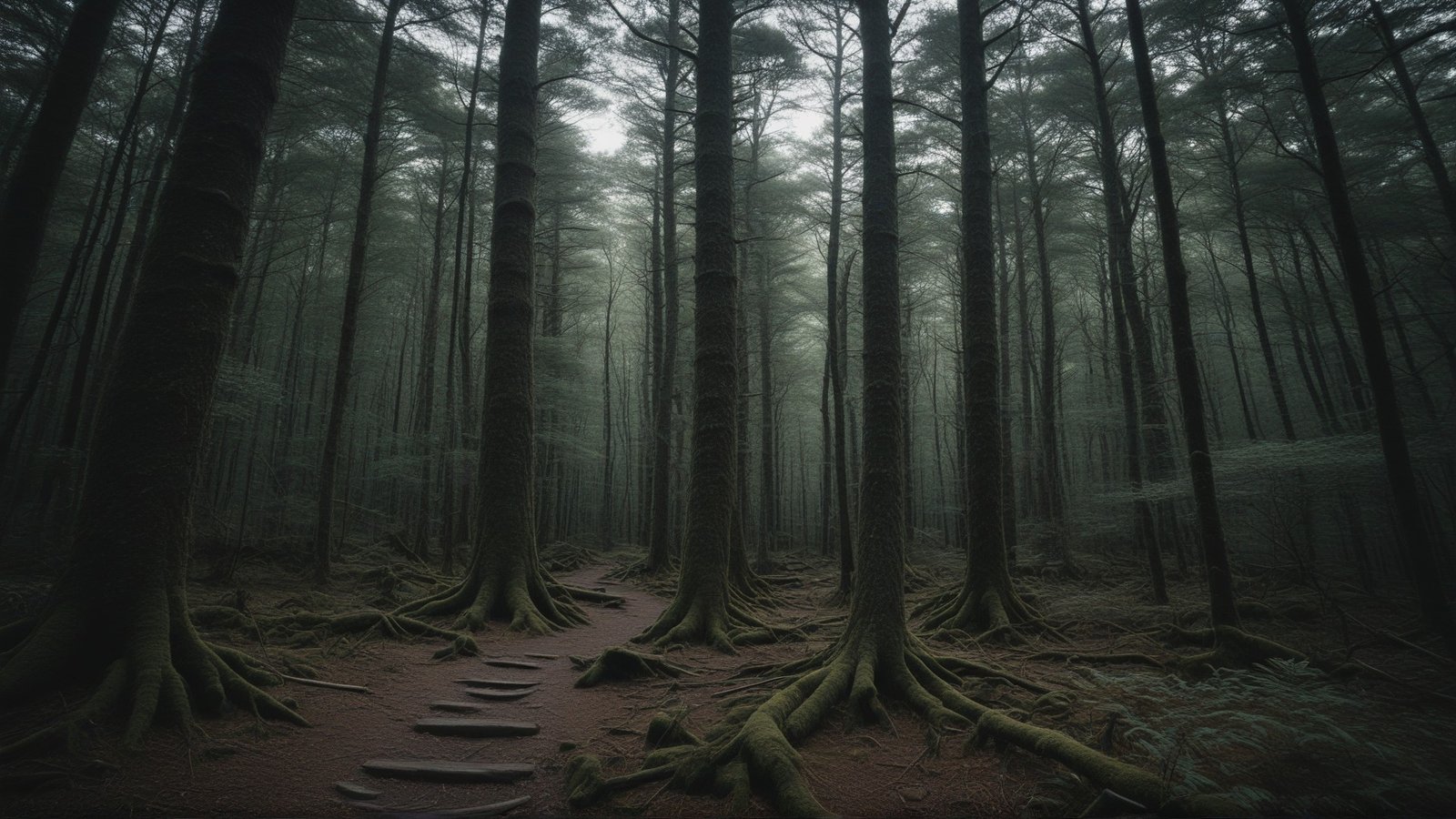
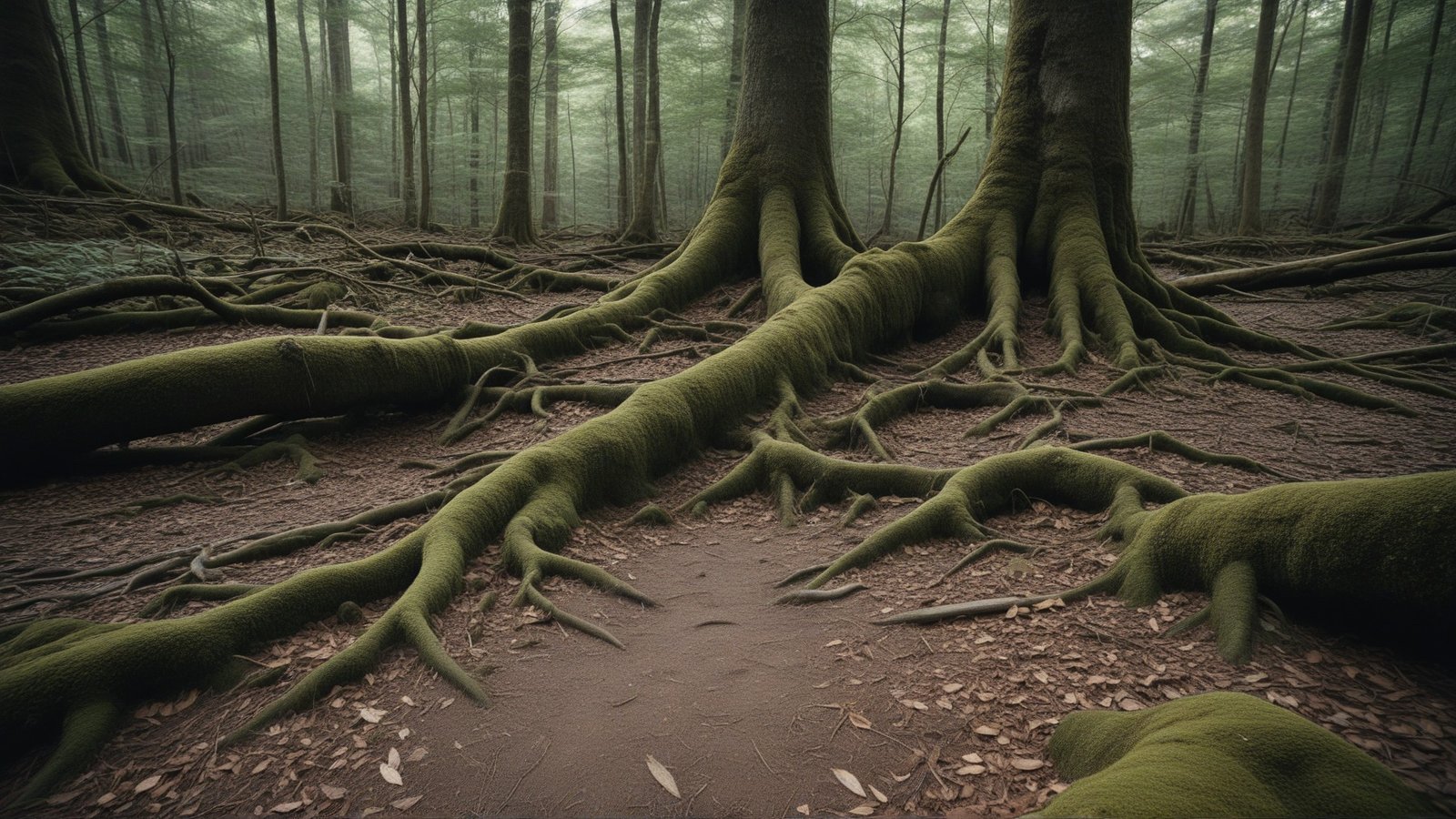
Aokigahara Forest
Location : Aokigahara Forest
Location Type : forest
Geographic Location : Yamanashi, Japan
Current Status : active
Physical Description : A dense forest at the northwest base of Mount Fuji in Japan, known for its thick canopy and steep slopes.
Origin Date : Unknown, but believed to have been formed during the Jomon period (around 14,000 BC)
Original Purpose : Natural forest with no specific human-made purpose
Historical Significance : One of Japan’s most famous suicide locations, leading to its association with death and depression in popular culture
Tragic Events : 1958: First recorded suicide, 1960s onwards: Increased suicides due to societal pressures, 1970s-1980s: Multiple suicides each year
HauntedRegistry
"Documenting the world's most haunted places."
HauntedRegistry
Aokigahara Forest - Introduction
Nestled within Japan’s Aokigahara, the world’s most infamous forest, lies a haunting enigma that has captivated the global imagination for decades. This expansive sea of verdant trees, dating back to the Jomon period around 14,000 BC, was once an untouched natural sanctuary. However, its tranquility has been marred by a dark and tragic legacy – it is one of Japan’s most notorious suicide spots, a grim distinction that has earned it the moniker “the Sea of Death” or “Suicide Forest.” The first recorded suicide here occurred in 1958, with subsequent decades witnessing an alarming increase in such tragedies. Yet, the forest’s eerie allure extends beyond its somber history; it is also a hotbed of reported paranormal phenomena, making Aokigahara one of the most notable haunted locations worldwide. This article aims to explore these chilling encounters and unravel the complex tapestry of fear and folklore that shrouds this enigmatic place.
Historical Overview
The location under scrutiny, hereafter referred to as the Site, is a wooded path and its adjacent entrance, situated near the former village of Koyama in Japan’s mountainous region. The Site was part of an ancient pilgrimage route established during the Edo period (1603-1868), serving as a thoroughfare for travelers and merchants between Kyoto and Osaka. Its original purpose was to facilitate trade and communication, with the entrance marking the boundary between two feudal domains. The 19th century saw significant historical events that may relate to the Site’s reported paranormal phenomena. In 1825, during a severe drought, a tragic incident occurred near the entrance. A group of villagers, desperate for rain, attempted a ritual known as ubasute, abandoning an elderly woman on the path, believing her sacrifice would appease the gods and bring precipitation. This event, though rare, was not isolated in feudal Japan, and it is possible that such a tragic occurrence near the Site could contribute to its reported hauntings. Additionally, during the Meiji Restoration (1868-1912), the once-bustling pilgrimage route fell into disuse as modern transportation methods emerged, leading to the decline of Koyama village and potentially creating an atmosphere conducive to eerie feelings and apparitions along the now-quiet path.
The Hauntings
In the heart of Aokigahara, visitors claim to encounter a range of paranormal phenomena. Among these, disembodied voices are perhaps the most frequently reported. Witnesses describe hearing whispers, sobs, or even cries for help, seemingly emanating from empty spaces within the forest. Some accounts allege that these voices are more audible during specific times of the day, often in the early morning or late evening hours. Another unsettling experience reported by visitors is the sensation of being followed or touched by unseen entities. According to accounts, these encounters can be quite physical, with individuals feeling hands pushing them or cold breath on their necks. Some allege that these sensations are accompanied by an intense, inexplicable sense of dread, as if an oppressive presence is nearby. The frequency and intensity of such experiences appear to vary, with some visitors describing isolated incidents, while others claim to have repeated encounters throughout their time in the forest.
Where is Aokigahara Forest located and how can I visit it?
Aokigahara Forest, also known as the Sea of Trees, is located at the northwest base of Mount Fuji in Japan. It’s accessible by public transportation from Tokyo. The most common way to reach it is by taking a train to Kawaguchiko Station and then a bus to the Aokigahara Forest entrance.
What is the historical background of Aokigahara Forest?
Aokigahara Forest has been associated with death since the late Heian period (794-1185) when it was used as a site for ubasute, or familial suicide. In 1960, two lovers committed suicide there, which further popularized its association with death in Japanese culture.
What are some specific haunting claims associated with Aokigahara Forest?
Visitors have reported hearing disembodied voices, seeing apparitions, and feeling an intense sense of dread or unease within the forest. Some claim to have found abandoned belongings or personal items left behind by those who took their own lives there.
Have any paranormal investigations been conducted in Aokigahara Forest?
Yes, several paranormal investigation teams and researchers have visited the forest. However, most evidence collected is anecdotal or subjective, with no definitive proof of paranormal activity. Some investigators report unusual EMF readings and EVP (Electronic Voice Phenomena) recordings.
What cultural significance does Aokigahara Forest hold in Japan, and how has it been portrayed in media?
Aokigahara Forest holds significant cultural importance as a symbol of death and rebirth in Japanese mythology. It’s often associated with the yūrei (ghost) legend and is featured prominently in literature, film, and video games, such as ‘Toshio’ from the Silent Hill series.
Phenomena Types : apparitions, disembodied voices, cold spots, eerie feelings
Specific Entities : Yūrei (woman in white), Jukai-kitsune (fox spirit), Ubasute (abandoned old woman)
Activity Patterns : most activity reported near the entrance and along the main trail, increased reports during full moons and New Year’s
First Reported : first documented in the 19th century by local villagers
Frequency : sporadic with multiple reports per decade